

Sibling trio carries on Ohe farm legacy
News | Published on December 30, 2025 at 2:54pm EST | Author: frazeevergas
0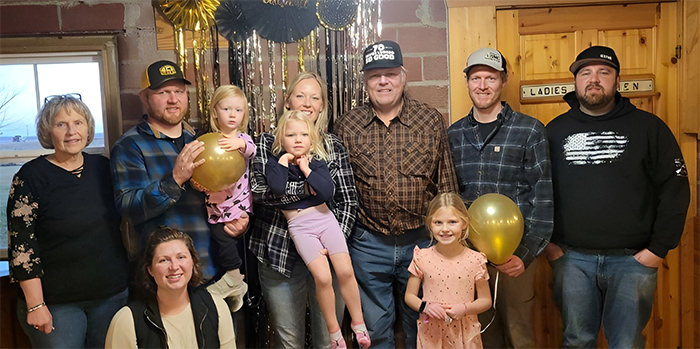
Three generations of Ohe family farmers posed for a photo at Ohe’s Barn. Ohe’s Barn is an event barn west of Erhard operated by the Ohe family where weddings, youth events, and a number of celebrations are held.
By Louis Hoglund
Pelican Rapids Press
Every year, Soil and Water Conservation Districts in Minnesota recognize a local individual or group for their outstanding conservation efforts.
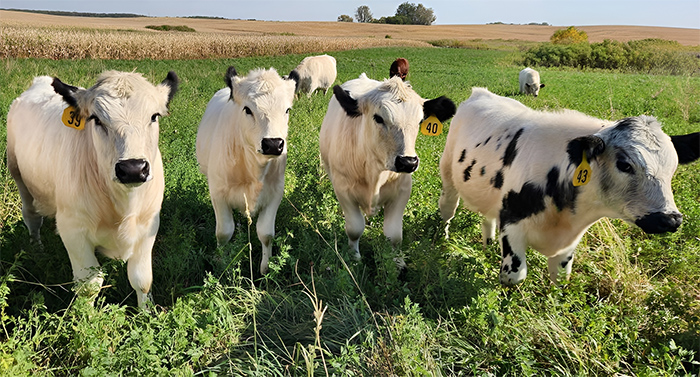
Pasture-raised beef is part of the extended Ohe family business.
This year, the West Otter Tail SWCD has chosen siblings Marshall Ohe, Landon Ohe, and Allison (Ohe) Berg of the rural Rothsay-Erhard-Pelican Rapids area as the “Conservationists of the Year.”
They farm corn, soybeans, wheat, alfalfa, and annual forages.
Additionally, they rotationally graze roughly 45 cow/calf pairs and recently added 100 chickens for egg production.
The recognition should come as no surprise, as their family has a history of outstanding land stewardship on the farm.
In fact, their father, Orland Ohe, won the same award back in 1993.
In 2019, the extended family launched a diversified farm operation, “Ohe’s Outpost.” Descendants of Norwegian immigrants, the Ohes are six generations—and on—with the seventh growing fast.
“We know that food grown on healthy land with regenerative farming practices is healthy food,” states the Ohe’s OUTPOST website. “We act as stewards of this land, caring for its health to support yours.”
Mom and dad, Orland and Mary, remain involved in the operation, though at a more ‘relaxed” pace, with the three siblings taking on a larger role. Ohe’s Outpost markets packaged locally grown beef and farm fresh eggs, along with its row crop operations. The Ohe’s are frequent vendors at the Pelican Market on Fridays in the summer-fall; and also at the Saturday market in Fergus Falls. All three siblings are involved in different ways. Allie, for example, is the “egg lady,” while Landon is focused on the packaged beef.
After the siblings took over the day-to-day operations of the farm, they noticed a few neighbors had been implementing cover crops and strip-till practices on their fields. Their curiosity led them to attend several soil health meetings, and in 2017, they decided to try their hand at planting cover crops on their wheat fields after harvest.
After realizing the potential value that the cover crops had for cattle feed, they started planting wide row corn, inter-seeding cover crops, and integrating livestock on their fields. They have also converted to strip-till and no-till practices. Some of their tillable acres have been seeded into perennial pastures, and the use of full-season annual forage mixes helps extend the grazing season. The stockpiled forages and the use of bale grazing have helped reduce winter feed costs.
Over the years, the siblings have enrolled in both State and Federal Programs through the NRCS and SWCD offices. Ultimately, the siblings’ decision to implement these practices has helped them increase yields, improve soil health, and reduce labor and input costs.
All five of the Ohes are Pelican Rapids High School graduates, including parents Orland and Mary. Allison graduated in 2007; Landon in 2010; and Marshall in 2013.
The West Otter Tail SWCD would like to congratulate the Ohe and Berg Families for their contributions to conservation, noted Jacob Nelson, Farm Bill Technician with the West Otter Tail Soil and Water Conservation District, based in Fergus Falls.
What’s the difference between “Strip-Tilling” and Conventional Tilling?”
Strip-Till: Strip-till involves cultivating only narrow strips (about 10-20 cm wide) where seeds will be planted, leaving the rest of the soil undisturbed between rows. This method uses specialized equipment, often guided by GPS, to create seedbeds in the fall or spring. Strip-till reduces soil disturbance, improves water retention, and lowers fuel and labor costs compared to conventional tillage. It is especially beneficial in areas with heavier, poorly drained soils, as it creates a warmer, better-drained seedbed for planting.
Conventional Tilling: Conventional tillage typically means using tools like chisel plows and finishing tillers to turn over and prepare the entire field before planting. This method disturbs the whole soil surface, which can help control weeds and pests but increases erosion risk and fuel use. Conventional tillage often requires multiple passes over the field, leading to higher labor and equipment costs.