

Growing connection through local food
News | Published on February 27, 2026 at 1:29pm EST | Author: frazeevergas
0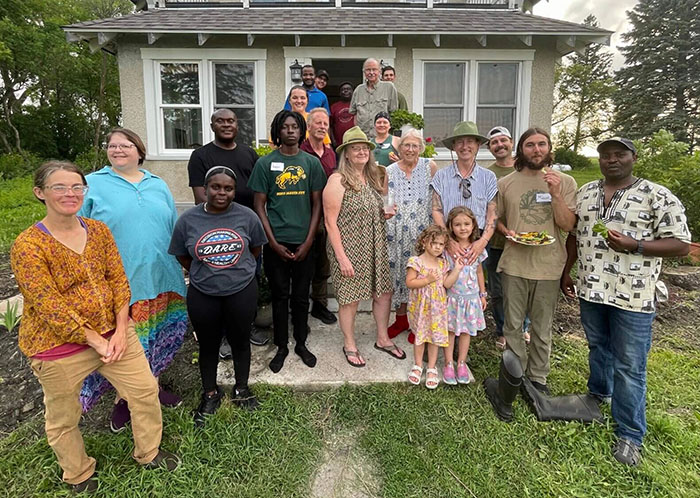
Groups of community members from around the west central region of Minnesota gathered last summer at Farm in the Dell and New Roots Farm Incubator to work together, share meals made from locally grown food, and discuss the challenges and opportunities within our region’s food system.
By Ashley Quam
West Central Initiative
On two summer days in June 2025, groups of community members from around the west central region of Minnesota gathered at Farm in the Dell and New Roots Farm Incubator to spend time working alongside farmers, sharing meals made from locally grown food, and talking honestly about the challenges and opportunities within our region’s food system. These gatherings were part of a project led by Renewing the Countryside and supported by a 2024 West Central Initiative Grant.
The goal was straightforward––reduce rural social isolation among farmers, strengthen leadership and relationships across the local food system, and create space for meaningful connection. New partnerships, deeper understanding, and momentum that continues beyond the events themselves emerged.
Laying the Groundwork for Lasting Impact
Matt Barthelemy serves as Renewing the Countryside’s Local Foods Project Coordinator and is a founder of Farm Buds, a volunteer-led initiative that has brought people together on farms since 2019. His background in community organizing, relationship-based leadership, and farm volunteering made him the perfect person to lead this project.
Before any gatherings took place, Matt spent a year building relationships across west central Minnesota and the area’s tribal nations. He met with local food groups, farmers, and community partners to better understand regional priorities and values, making friends and collaborators along the way.
Wanting to uplift and connect local food systems, Matt worked with local partners to create a plan for gatherings that included shared work, shared meals, facilitated conversation, and opportunities for connection. The West Central Minnesota Food Policy Council played a key role, acting as a regional connector by helping select host farms and recruit participants.
From those conversations, two nonprofit farms were chosen as hosts: Farm in the Dell and New Roots Farm Incubator.
Both farms are deeply involved in local food systems and offer spaces where community members can engage directly with farmers and the land.
The Winning Formula: Volunteering, Farm Fresh Meals, and Conversation
Each gathering followed a simple structure. Participants volunteered alongside farmers, offering labor support while learning directly from those who grow food in the region.
“Connection can happen more organically when people are working together toward a shared goal,” Matt said.
They then shared a meal prepared by local chefs using local ingredients. Finally, they gathered for a facilitated conversation about community resilience and the challenges facing farmers and food systems.
At Farm in the Dell, Chef Candace Stock prepared a meal using local produce, local bread and plants she foraged nearby. A few weeks later, Chef Paul Strand, District Chef for Moorhead Area Public Schools, prepared the local meal at New Roots Farm Incubator.
Facilitated conversations focused on community resilience and the challenges facing farmers and food systems followed the meals. Participants were invited to share personal experiences with local food or examples of resilience in their communities. These conversations brought together perspectives from nonprofit leaders, educators, city officials, cultural organizers, and farmers.
Outcomes That Extend Beyond the Farm
Those conversations didn’t end at the table.
Since the participants of the two events included decision-makers at food banks, local restaurants, school systems, and representatives from the City of Dilworth and the City of Moorhead, the gatherings cultivate relationships between institutional buyers, policy-makers, and local farmers, and facilitated opportunities for participants to create greater community resilience through strengthening their local food system.
Chef Paul Strand connected with many local farmers, creating opportunities for new purchasing relationships. Thanks to Paul’s involvement, the Moorhead School System began purchasing from Farm in the Dell—creating new revenue streams for farmers and strengthening local food access for students.
Other connections crossed cultural and community lines. Cleophace Mukeba from Baraza La Afrika connected with White Earth Nation community leaders, Maria Fatz and Dana Trickey, around shared interests in food, culture, and community. Those conversations have already led to further connections and plans for future collaboration focused on cultural exchange and shared learning.
Leadership development was an intentional component of the project. Pelican Rapids resident Mason Berube is helping build local capacity to lead similar efforts in the future. After making a connection through this initiative, Berube collaborated with Concordia College’s Ahna Novasio––who attended the Farm in the Dell event––to introduce a local farm volunteer experience as a part of Concordia’s perennial Hands for Change volunteer day in August, which connects incoming students with local community efforts. Another key goal was to strengthen the West Central Minnesota Food Policy Council, with council members actively participating and introducing each event’s attendees to opportunities to help shape the next steps for regional food systems work.
Supporting Sustainable Impact
Through the West Central Initiative grant, Renewing the Countryside addressed social isolation among farmers, supported leadership development, strengthened regional partnerships, and connectivity within west central Minnesota and White Earth Nation’s local food system. The project highlights how relationship-centered approaches can generate outcomes that are both immediate and lasting.
Farm in the Dell and New Roots Farm Incubator demonstrate how nonprofit farms can serve as community and cultural hubs.
Sustainability is built through the people, places, and relationships that strengthen our communities.