

Vergas brush disposal program facing elimination
News | Published on March 24, 2026 at 2:15pm EDT | Author: frazeevergas
0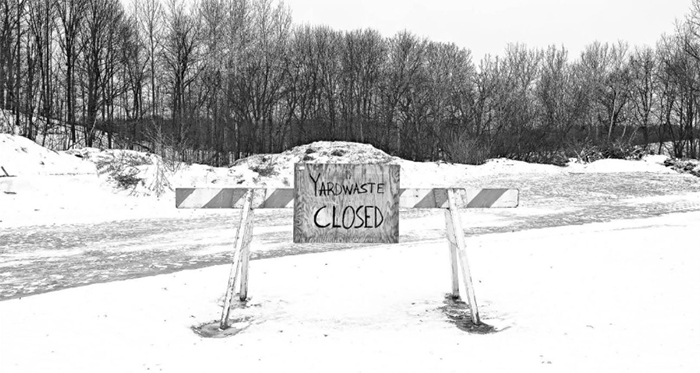
Brush disposal has not been allowed since a December fire at the Vergas Recycling facility. The Vergas Street/Sidewalks/Yard Waste Committee has made a recommendation to permanently disallow brush disposal. A decision will be made at a special city council meeting on Wednesday, April 8.
By Robert Williams
Editor
On Tuesday, March 17, the Vergas Street/Sidewalks/Yard Waste (SSYW) Committee addressed yard waste operations following a recent fire at the disposal site and made a recommendation to the city council to permanently eliminate the allowance of brush disposal at the yard waste facility. The discussion revealed multiple and ongoing challenges with the brush disposal portion of the yard waste program and brush disposal has not been allowed since the fire.
The recommendation to the city council was made later that evening to eliminate the brush disposal program with permits to be sold at $65 for yard clippings, leaves, etc.
Mayor Julie Bruhn asked for clarification as to what exactly could be disposed of. The answer was grass and leaves.
“It seems like every time we’ve done something it’s been a headache; we’ve had multiple violations; we’ve had people who have lit the brush pile on fire on their own,” said Council Member Bruce Albright. “We also probably have some liability issues there.”
Council Member James Stenger pushed back noting he used the site when he trimmed and cleaned up his grandmother’s property, removing a large amount of limbs and waste that she was not able to.
By ending brush disposal in Vergas, residents would now have to travel to Frazee to dispose of their brush, stumps, etc.
“People have always taken advantage of us there,” said Albright.
Stenger rebutted by saying he believes the city has not done everything possible to deter such behavior.
“We put up a deer camera when we could have looked into better camera systems,” he said. “We have better camera systems all over this town.”
The lack of internet connectivity is the main reason for the lack of a better camera, Albright responded. There is also no building to house a camera, no electricity at the site.
“The only thing we have is the one light pole,” said Julie Lammers, Clerk/Treasurer.
The recent fire cost the city approximately $1,200 from the Vergas Fire Department, while other departments provided mutual aid at no charge. The waste container company replaced damaged equipment at no cost to the city.
After a discussion about the challenges and risks associated with brush disposal, the committee concluded that continuing to accept grass clippings and other non-woody yard waste would provide valuable service while eliminating fire risks. This would give city employees more space and ability to properly manage and turn compost piles.
Albright noted that the city regularly received complaints about smoke from burning operations regardless of wind direction and expressed concern about liability risks. He observed that people could follow trucks carrying brush loads directly from Highway 108 to the city’s site, indicating the program was attracting users from well beyond the city limits. The committee discussed that people had been misusing the site by bringing prohibited materials like stumps, despite clear signage. Some users had been observed dragging stumps off their trailers one by one, clearly ignoring the restrictions.
Paul Pinke noted that while some customers believed the yard waste site brought people to town, those visitors were not likely to make purchases while dumping waste, though they might return later. The committee considered several alternatives, including restricting brush disposal to city residents only, but recognized enforcement challenges without staffing the site.
They noted that other communities like Frazee, Detroit Lakes, New York Mills and Pelican Rapids continued to accept brush. but at higher prices than Vergas charged.
Albright reported that he had contacted MPCA regarding regulations and learned that ash is not currently classified as a pollutant, though the city needed to obtain a general permit for their yard waste compost facility. This would involve registering the site online at no cost to maintain MPCA records of yard waste facilities. The discussion also covered safety and liability concerns, including instances where people had started unauthorized fires, either from hot ashes dumped from burning barrels or, in one case captured on camera, someone on a four-wheeler starting fires around midnight.
Neighbors north of town had reportedly expressed support for closing the brush disposal operation and called to thank the city when burning was temporarily suspended.
Much of the discussion was repeated at council and prior to making a firm decision, the idea to table the matter until the next SSYW Committee meeting on Wednesday, April 8 was agreed to unanimously.
Albright noted he has heard from multiple residents thanking him for closing the brush program after the fire. Stenger rebutted by saying residents have personally asked him when it is going to be reopened.
“We spoiled everybody when we first started because anybody can dump whatever,” said Pinke.
A special council meeting will be held after the already scheduled Board of Review meeting on Wednesday, April 8 to address the issue. The Board of Review is scheduled for 1-1:30 p.m.
Energy and Resiliency
The West Central Initiative (WCI) Vergas solar project installation at the Event Center was delayed due to an unforeseen transformer upgrade that was needed to facilitate the project. The Energy and Resiliency Advisory Board provided a new installation timeline at their February meeting.
The battery roof build out (battery room blueprint complete) was completed at the end of January. The electrical schedule was done in early March and the roof ground schedule is marked for May 8-12.
Solar panels and batteries are being installed at the Event Center with multiple future uses, including as a city-wide backup power supply that could be used during an outage.
The panels are expected to be operational by June 1.
A second potential project of solar power for the Vergas Fire Hall is also being considered.
The CDH-Vergas Fire Board reviewed solar information and WCI energy analysis at the February 2 meeting. The board approved to proceed with expressed interest since it is not a final commitment.
Event Center
The Event Center board discussed potential fundraising events to address building improvement needs, noting that the Event Center currently lacks funding for necessary projects. City Clerk and Board Member Rachel Nustad agreed to take a leadership role in organizing such events with board support and guidance.
The board briefly discussed the success of the recent vendor market, which had an estimated 300-350 attendees. Feedback was positive, though organizers noted that having food options and folding chairs would improve future events.
Fire
The CDH-Vergas Fire and Rescue held its annual meeting on February 2, at the Vergas Fire Hall.
Annual Fire Incident Report: 43 calls.
• Location of calls: Hobart 52 percent, City of Vergas 30 percent, Candor nine percent, Dora nine percent
• Time of calls: 67 percent 6 a.m. to 5 p.m. and 33 percent 5 p.m. to 5 a.m.
• Type of calls: 27 percent (12) Structure fire, Grass Fire 16 percent (seven) nine percent (four), Compost Fire and several types of calls with only one or two instances.
• Mutual aid calls: 16 (Pelican 31 percent), (Frazee 25 percent), Dent (19 percent), Perham (19 percent), (Detroit Lakes six percent)
Support also provided to Bemidji for storm damage
• Fire department fully staffed at 27/26 currently active
• Goals for 2026: start preparing for next new truck, raise truck fund, retain and recruit fire department members, and increase public fire prevention and awareness
Bids were obtained and estimated at $50,000 to replace the retaining wall and lower parking lot.
The solar installation opportunity and reviewed solar analysis noting cost after incentives of $23,500 and annual energy savings of $5,100 with 30-year lifetime savings of $149,661. It will be cash flow positive in less than five years.
Fire and Rescue will proceed to be on the request for proposals with the caveat it can still pull out of the final project.
It was noted there is a need for a partial roof replacement on the north part of the fire hall as the shingles are 20-years-old.
Annual rescue calls report: 143 calls
• Location of calls: Vergas 47 percent, Hobart 27 percent, Candor 19 percent, Dora 7 percent
• Time of calls: 50 percent morning and 50 percent night
• Type of calls: 22 percent lift/assist, three percent stand by for fire department, and several with only one or two instances
• Mutual aid calls: nine with Dent
• Fully staffed at 18 members
Liquor
Per Liquor Store Manager Kyle Thiesen’s recommendation, Alyssa Harmann was hired at the starting rate at the Vergas Liquor Store.
Park
Tony Sailer reported that the baseball committee had met in February and developed a wish list of needed improvements. The top priority was a new chalker.
The committee also discussed installing outfield fencing tubing across the top of the outfield fence. Sailer had researched pricing, finding 250 feet of tubing for $330, estimating they would need approximately three times that amount for the entire outfield, bringing the cost close to $1,000, plus shipping. Additionally, the committee considered a batter’s eye for the same field due to the building behind the pitcher creating visibility issues. However, Sailer found this option “incredibly expensive.”
The board discussed prioritizing these improvements within their $1,500 budget and Sailer indicated the chalker was the top priority.
The board discussed the safety and visibility benefits of the outfield fencing, noting that the current fence posts create safety hazards and make it difficult to determine home runs.
Sailer confirmed that the local American Legion team would not be playing games at the facility this year and noted that Frazee’s usage remained uncertain, but would likely result in only 6-10 games maximum for the season.
Discussion expanded to broader questions about the future use of the small baseball field, given the lack of local little league teams and the reality that most youth players were already committed to teams in other communities.
The board acknowledged the startup costs and travel expenses that make local youth baseball challenging in smaller communities.
Board members discussed potential alternative uses for the small field if baseball usage continued to decline, though they emphasized that any changes would require city council approval with specific proposals. The consensus was that the baseball committee would not invest in major improvements without clear indication of future baseball usage.