

Miracle baby now a one-of-a-kind kid
News | Published on August 1, 2026 at 5:03pm EDT | Author: Kendall Koenen
0‘He teaches us that anything is possible for anybody’
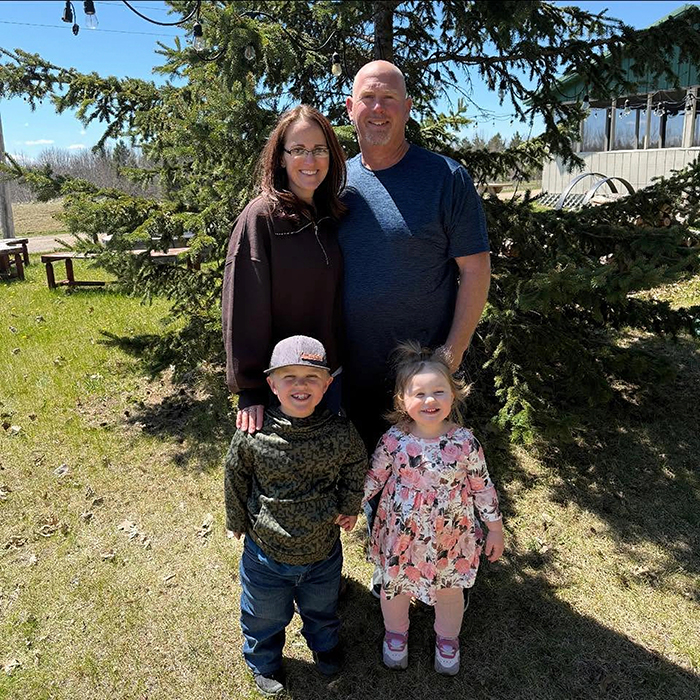
The fourth year of Liam being part of a research study for achondroplasia began this past June. Treatment includes weekly injections. Over the past year, Liam has grown nearly two inches and increased his wingspan by 1.5 inches.
By Robert Williams
Editor
Liam Zitzow, 9, can be found running the offense on youth basketball courts and swinging for the fences on local baseball diamonds, but how he got there is a miracle.
Liam was born with achondroplasia, which impairs how cartilage converts to bone and is a genetic form of disproportionate short-limb dwarfism.
At 21 weeks, Liam’s parents Kesley and Goob were informed he had skeletal dysplasia—his limbs were measuring smaller than normal.
Kelsey’s perspective was, “whatever it is, it is; we’re going to live with it. There’s nothing we’re going to change.”
Neither parent carried the gene to produce Liam’s condition; it just kind of happened, Kelsey said.
The fact that Liam was going to survive birth was very much in doubt, but he was ready at 37 weeks. The doctors were prepared for something else.
“Two days before Liam was born they informed us he wasn’t going to survive the Neonatal Intensive Care Unit (NICU),” Kelsey said.
Pre-birth chest measurements were such that Liam was not expected to survive outside of the womb.
“There were lots of tears; it was a lot,” Kelsey said. “The doctor gave us a big hug and told us, ‘all we can do is hang onto hope because miracles do happen,’ and she was right, miracles do happen.”
Liam had his own plan and came into the world just fine, surprisingly not needing any breathing assistance. During the birth, Kelsey was also calm and on the same page as newborn son.
“When my water broke I had this sense of calmness; it was so weird,” she said. “It’s up to God now.”
The Zitzow’s miraculous event showed his face in a smiling, baby boy.
“The doctors said there was no way from all the images they took that this could happen,” said Kelsey.
Liam’s first year was not the easiest.
“He was very sick all of the time until we found out he was aspirating everything he was drinking,” Kelsey said.
Liam was hospitalized and intubated until it was discovered his swallowing muscles needed to be strengthened and he overcame Respiratory Syncytial Virus (RSV), a common virus that affects the lungs and breathing tubes.
“After we did that everything was great, but that first year was a struggle,” said Kelsey.
In total, Liam spent 50 days of his first year of life hospitalized.
“That was pretty traumatic too,” said Kelsey.
His growth was monitored over the coming years and by the time he was four-years-old Dr. Brooke Moore, a pulmonologist, recommended Voxzogo, an FDA-approved medication for kids with achondroplasia. The medication required daily injections at home. Goob was on the road a lot and Liam was entering preschool, so it was up to Kelsey to deliver the injections.
“I just couldn’t imagine having to give my child a shot every single day,” she said.
A year later, a new medication was available, but not FDA-approved, called TransCon CNP, which only required a weekly injection,
At that appointment, Kelsey asked Dr. Moore to find a doctor, anywhere in the world, that had experience with kids with achondroplasia and both medications.
“She found one right in St. Paul,” said Kelsey.
Pediatric Endocrinologist Dr. Abuzzahab was available, but Kelsey was not ready.
“She called me three or four times and I could not get myself to call her back,” Kelsey said. “I didn’t want to accept there was anything wrong with my child. I’m trying to fix my child. We taught him God created everyone unique and different and we’re not trying to change what God already created.”
The two finally spoke and Dr. Abuzzahab reassured Kelsey that the medication would not hurt Liam, it would only help him, leading to an initial consulation.
TransCon CNP not being FDA-approved meant that Liam would be taking part in a research study involving only 80 kids worldwide. Minnesota had one spot for a child over and one spot for under the age of five.
The first year of the two-year study was double-blinded, meaning neither the participants nor the researchers knew who was receiving the active treatment and who was receiving a placebo or alternative treatment.
Liam experienced rapid growth the first year which led the Zitzows to believe he was getting the new medication, however, Liam was actually on the list for the placebo.
The second year, the family was assured Liam was on the medication and in the past three years he has jumped from the low-end of the growth scale to the median.
It was hard to deduce if the meds were helping that growth or if it was just Liam being Liam.
“That could just be him doing his thing and not be the medication,” Kelsey said.
Liam has always been consulted on whether he wanted to be on meds or not and at the tender age of nine, he had to give his written consent, which he did.
“He calls it his ninja; he didn’t like the word shot or injection, so that’s what he calls it,” Kelsey said.
Two years ago when Liam was six, a second miracle came to the Zitzows in the form of their daughter Layla, who ironically was born and grown “off the charts” in regards to height. Part of Layla’s miraculous arrival on Earth was that after Liam a second pregnancy was not in the family plans.
“After Liam, I said, ‘no, I’m done; I’m never doing this again,’” Kelsey said. “The one stint he was in the hospital for 21 straight days and I never stepped outside. That was tough for everybody.”
Kelsey was worried about having to care for a second child that could potentially be hospitalized for a length of time while having Liam at home.
In consultation about her second pregnancy, Kelsey received a boosting message from her doctor.
“She said, ‘I just think it’s a message from God; you’re finally feeling like you’re healed enough to want to be a mom again.’ I never thought I’d be here thinking we want to have another kid. She just said I think you’re ready.”
Layla was born with no complications, which was completely different from Liam’s experience.
Liam has successfully continued his treatment and now gets to do nearly anything he wants. Heavy contact sports like football are automatically out.
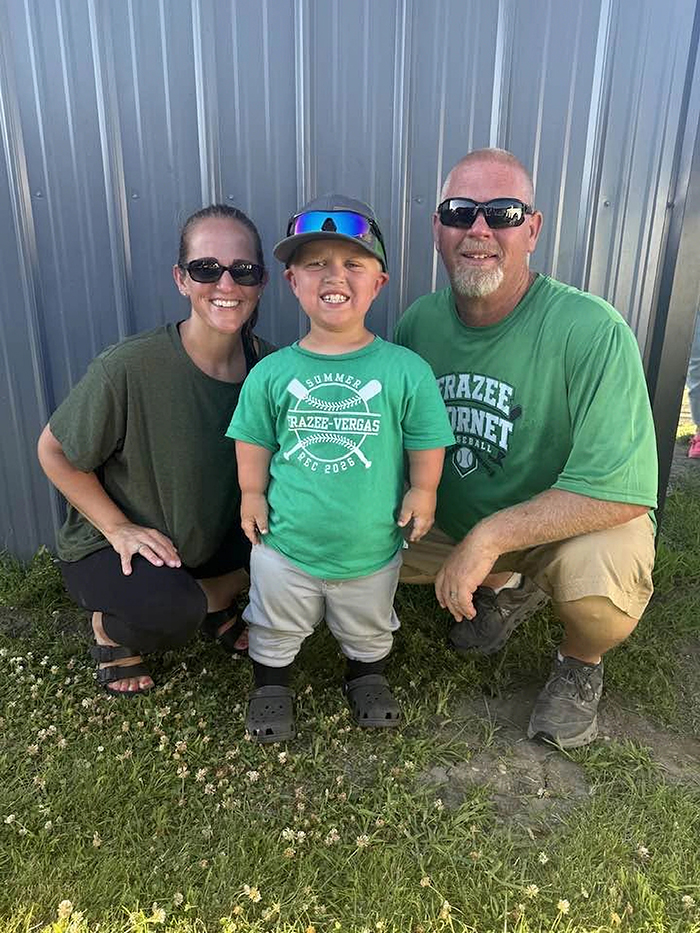
Liam found a love for baseball and basketball and is busy this summer playing both, along with Goob coaching his baseball team. Baseball also provides a fun, family tangent for Kelsey as her family made trips to Fort Myers, Florida, when she was a kid for spring training. Baseball was a bonding mechanism with her father.
“I love it; you don’t even know who my kid is out there because I cheer for everybody,” Kelsey said.
Liam plays second base and got his first hit against rivals Perham—a big deal for him personally and his family.
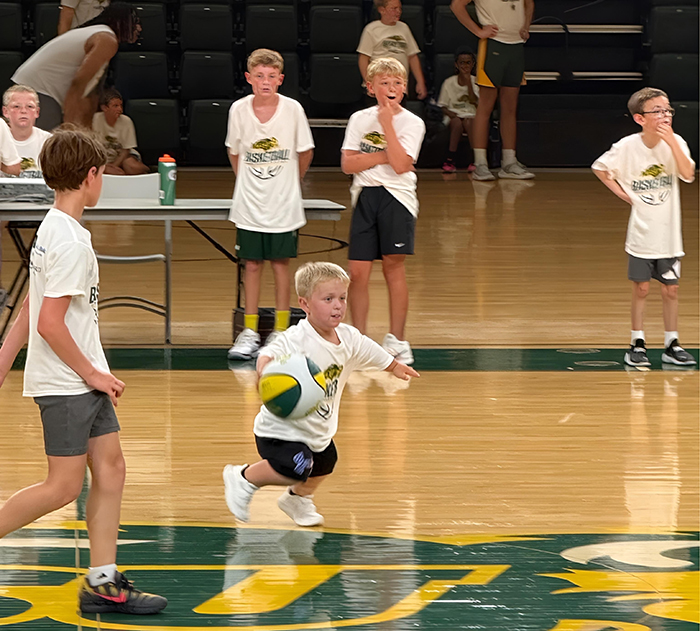
“That was pretty fun,” Kelsey said. “I never thought he’d be able to play any sport, honestly. Even the basketball season, never did I ever think he could play basketball and he’s the point guard. I still get watery-eyed. It’s awesome and he loves every minute of it. He doesn’t complain about anything.”
With each new achievement, Liam continues providing useful data as a contributing member of the research study.
TransCon CNP was FDA-approved in 2026 and now comes with a hefty price tag of $10,000 per weekly shot.
“Who can afford that? We are super fortunate, by being a part of this study they cover those costs,” Kelsey said.
The treatment includes physicals and blood draws every 12-14 weeks and annual electro cardiogram, X-rays, a Dual-Energy X-ray Absorptiometry (DEXA) scan to measure bone mineral density and body composition, physical function tests and a lot of questionnaires about how achondroplasia affects Liam as he grows.
“The biggest thing is that it doesn’t hurt him; there is not a huge side effect,” Kelsey said. “It’s not about changing or fixing him; it’s about helping him. Improving his quality of life and helping him do the things that he loves. He teaches all of us, more than anything. He’s definitely one of a kind. He teaches us that anything is possible for anybody.”